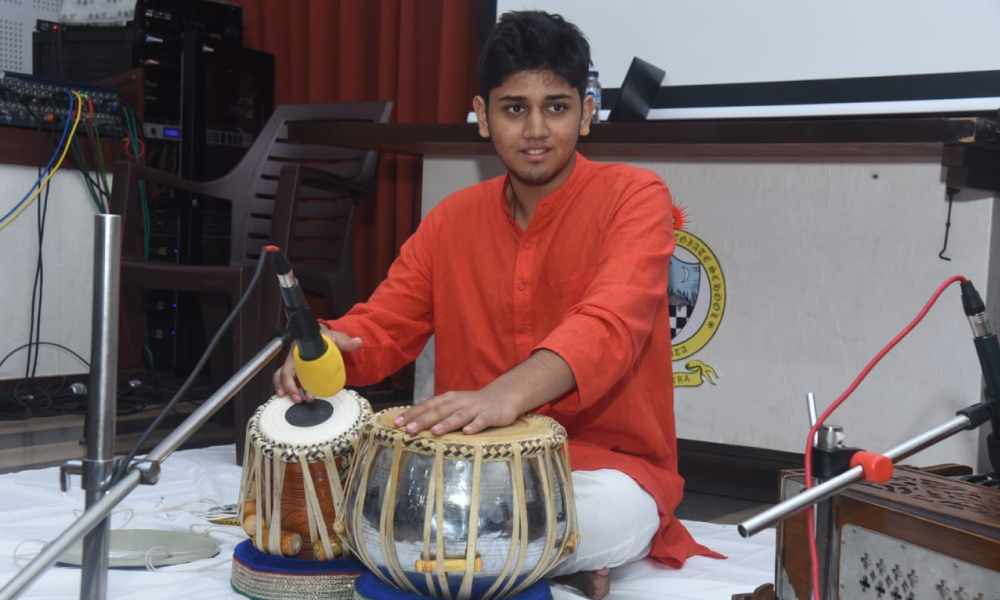
For centuries, rhythm has been more than just sound. In Indian classical music, it has been a form of meditation, a way of self-expression, and a path of connection with the divine. Nowhere is this clearer than in the tabla, the pair of hand drums whose voice can be thunderous one moment and whisper-soft the next.
Why tabla is more than technique
Playing the tabla is not just about technique. Yes, finger strength, clean bols and accurate taal matter. But the deeper lesson of tabla is about finding balance between mind, body, and soul. A student who rushes will lose the beat. A student who is distracted will miss the sam. The instrument quietly demands that you show up completely.
This is why many learners describe tabla practice as a moving meditation. Your hands are busy, yet your mind becomes still.
The three qualities every stroke asks for
Each stroke on the tabla demands awareness, patience, and surrender.
- Awareness: You listen to the resonance of every note and notice how your hand touches the skin (the puri) and the black ink spot (the syahi).
- Patience: A single theka can take weeks to feel natural. Progress in tabla is slow, steady and deeply rewarding.
- Surrender: At some point the student stops forcing the rhythm and begins to follow it. This is where playing turns into flow.
How daily riyaz builds focus and inner calm
Through daily practice, known as riyaz, students begin to experience rhythm as a living force that mirrors their inner calm and focus. Even 20 to 30 minutes a day can change how you feel. Many students notice:
- Better concentration at work and in studies
- A calmer response to stress
- Improved coordination between both hands
- A stronger sense of timing in everyday life
These benefits are why tabla is increasingly recommended not only to aspiring musicians but also to anyone looking for a mindful creative habit.
Breath and silence: the heart of rhythm
In every beat, there is a breath, and in every silence, a story waiting to be felt. The pause between two strokes is as important as the stroke itself. In classical tabla playing, a well-placed silence carries as much meaning as a fast, intricate phrase. Learning to respect that silence teaches students to be comfortable with stillness, something that is rare in today’s fast-moving world.
Is tabla meditation right for you?
You do not need to be a professional musician. Whether you are a complete beginner or have played another instrument, tabla offers a gentle and structured path. A good teacher guides you step by step, from basic bols like Na, Tin, Dha and Dhin, to taals such as Teentaal, and eventually to compositions and improvisation.
Start your tabla journey
If you have been looking for a way to slow down, build focus, and connect with something deeper, tabla might be the practice you need. Begin with a single beat, a single breath, and let the rhythm do the rest.
Ready to begin? Book a trial class with Rishik and experience how tabla lessons can bring balance to your mind, body and soul.